

How Your Home Battery Could Help Save the Texas Grid (and Pay You Back
How Your Home Battery Could Help Save the Texas Grid (and Pay You Back)
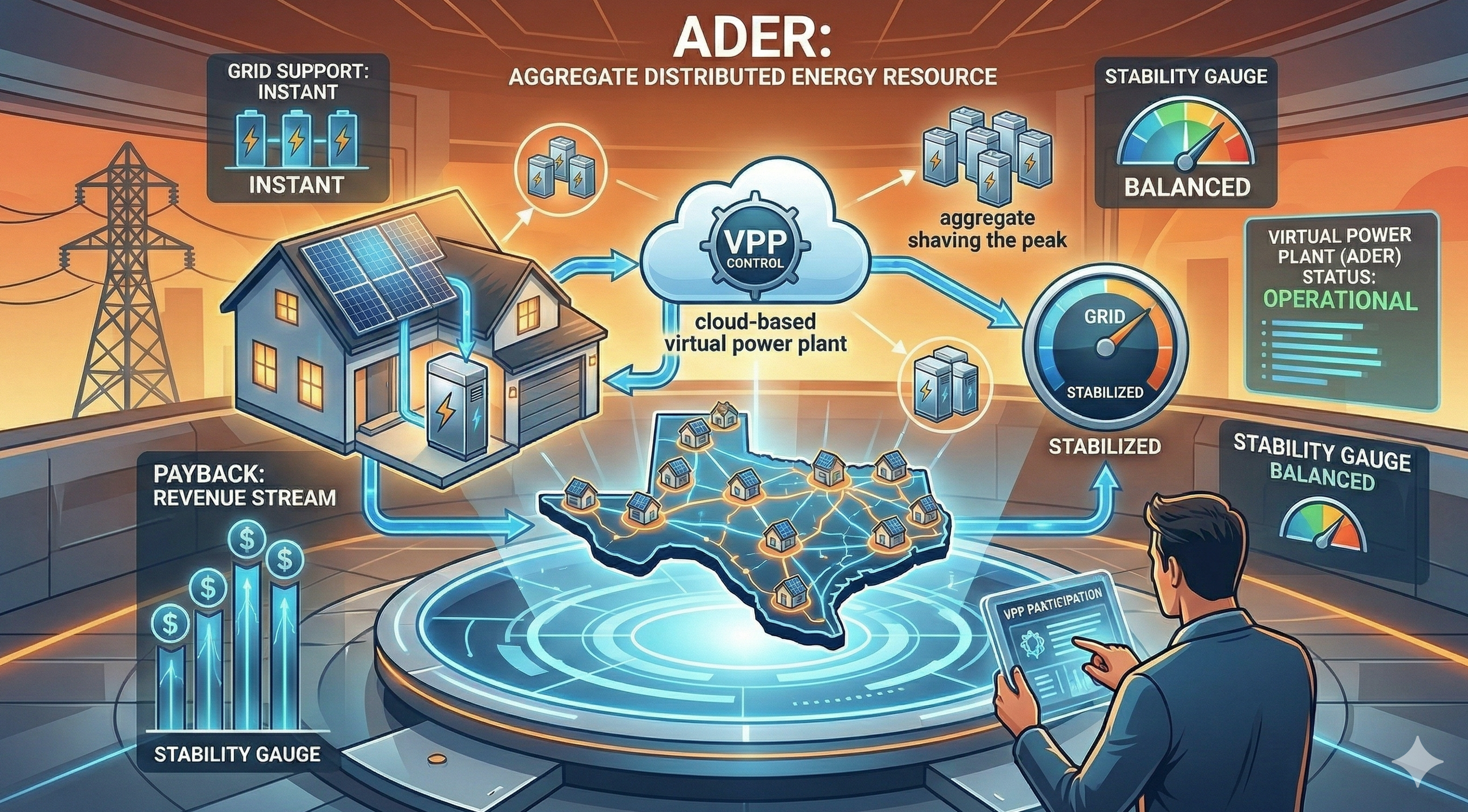
If you’ve been following Texas energy news, you might have heard a new acronym: ADER (Aggregate Distributed Energy Resource). In simpler terms, Texas is experimenting with "Virtual Power Plants."
The Concept:
During times of extreme stress—like a record-breaking August afternoon—ERCOT needs more power than plants can sometimes provide. Instead of turning on an expensive, polluting "peaker plant," the grid can now tap into a network of individual home batteries (like the Tesla Powerwall or Enphase 5C) owned by homeowners like you.
How it Works:
When you opt into an ADER program, you allow the grid to briefly pull a small amount of stored energy from your home battery during an emergency. In exchange, you get paid. This transforms your solar battery from a backup device into a revenue-generating asset.
Why it Matters for New Solar Shoppers:
When looking at solar today, the conversation isn't just about panels; it’s about storage. Recent pilot programs in the Houston and Dallas areas have shown that homeowners can earn hundreds of dollars a year by participating in these grid-stabilization efforts.
The Takeaway:
Solar is no longer just about lowering your bill; it’s about becoming a micro-utility. By installing a battery alongside your panels, you provide security for your family and stability for your neighbors—and the Texas grid is finally starting to pay you for that service.
Sources:
ERCOT Market Notice M-A030226-01: "Updates to ADER Pilot Participation Limits - Increasing to 500 MW," (March 2, 2026).
Public Utility Commission of Texas (PUCT): "Project No. 53911 - Aggregate Distributed Energy Resource Pilot Project Governing Documents."
ERCOT Operations: "ADER Monthly Report Summary," (Released April 2026).